
Inherited constitution
The fibre structure of the iris carries a blueprint passed from parents to offspring. It shows the strengths a horse was born with, and the weaknesses it will carry for life.
Practitioners on three continents
Inherited weakness, organ stress, accumulated toxicity, old injury. The iris carries a record of all of it, and it shows there long before anything else gives it away. Learn to read it, or have it read for you.
The premise
Most owners meet iridology the same way. A horse that is almost right. Recurring, vague, hard to place. Tests come back clear. The vet finds nothing wrong, because on the day, nothing is.
The iris works differently. It records constitutional weakness: the tissue a horse was born with, the strain it has been under, and where the body has been quietly compensating for years.
It does not diagnose. It tells you where to look, and it does so early enough to be worth knowing.
Reading the eye
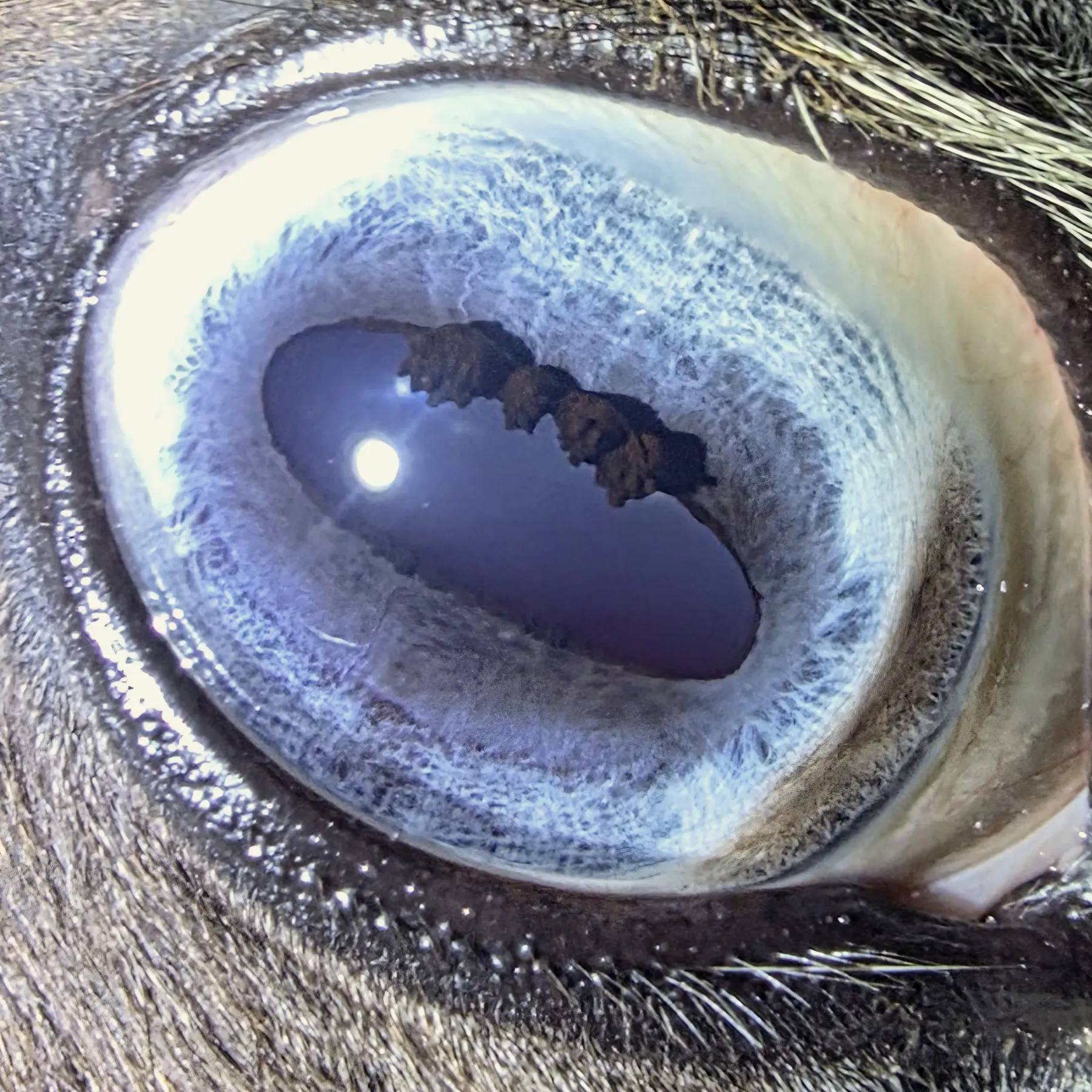
The density and regularity of the fibres running out from the pupil. Hereditary traits and behavioural patterns are clearly marked within the fibre patterns.
The band immediately around the pupil. Its regularity carries a great deal of information about the digestive tract.
The dark scalloped bodies at the pupil margin. Distinctive to horses, and one of the first structures you learn to read properly rather than mistake for a marking.
Discolouration and deposits indicate accumulation: what the body has not managed to eliminate, and where it has chosen to store it instead.
Offers insight into congestion, blockages and mineral imbalances.
This is an illustration, not a chart. Reading the full map, both eyes, and orienting yourself in any photograph is built up across the whole diploma.
What it shows
None of which require you to touch the horse.
The fibre structure of the iris carries a blueprint passed from parents to offspring. It shows the strengths a horse was born with, and the weaknesses it will carry for life.
Liver and kidney congestion shows in the iris long before it starts to disturb digestion, coat, hormone balance or muscle function.
Discolouration and pigment deposits map where the body has been storing what it could not eliminate.
Trauma leaves a permanent record in the tissue, including injuries that predate your ownership entirely.
Napping, girthiness, resistance and unexplained “attitude” often trace back to a discomfort the horse cannot report.
Iridology indicates tissue weakness and tendency. It sits alongside veterinary care rather than replacing it, and we teach that boundary firmly.
Choose your route
For practitioners
Ten modules, five assessed live case studies, and a qualification you can practise on. Studied entirely from home at whatever pace your life allows, with direct access to your instructor the whole way through.
For horse owners
You photograph your horse's eyes on your phone and tell us the history. You get back a written zone-by-zone analysis with herbal, feeding and management recommendations you can act on that week.
The curriculum
Who teaches it
Ellen Collinson studied human iridology first, then turned to horses. She attended post-mortem after post-mortem, matching the markings she had recorded in an animal's iris against what the veterinary surgeon actually found inside it.
That correlation, done patiently over years, is the method. It is why the course teaches you to grade what you see rather than simply name it.
Today the school is run by Michaela Chapman, who qualified under Ellen and now teaches every student personally from Derbyshire, UK.
From the register
Graduates working commercially across three continents, in their own words.
Her methods for linking the iris to systemic health and herbal support have completely elevated my practice. It gave me the whole picture of the horse’s health.
Equine iridology is so beneficial for your horse’s health. A world of knowledge uncovering so much insight.
I’m an internationally certified equine iridologist. It’s been one of the most important and beneficial additions to my practice, and the knowledge of herbal remedies is incredible.
Before you ask
Anything not covered here, or email Michaela directly at equineiridologyschool@gmail.com.
No. The course starts from first principles and assumes no background in iridology, anatomy or herbalism. What genuinely helps is practical time around horses. Knowing how to handle one safely matters more here than any certificate.
There is no deadline. Most students take between six and twelve months alongside work and horses. The material stays yours indefinitely, and you set the pace entirely.
The diploma is £1,500. You can pay in full, or in five equal payments of £300 across the first five months of study. There is no interest and no credit check, and you get full access from the first payment.
On completion you receive the Ellen Collinson Diploma of Equine Iridology and are added to the school’s public register of qualified practitioners. Graduates practise commercially in the UK, Australia and Canada. We will be straight with you: equine iridology is a complementary discipline and is not statutorily regulated. We say so openly, and we teach you to work alongside vets rather than in place of them.
No. The diploma is completed entirely online, including your assessed case studies. Everything is done from home, wherever home is.
A modern smartphone is genuinely enough to begin with. Module 9 covers photography properly, including the inexpensive add-on lenses that make the job easier, but you will not be asked to buy specialist equipment to start.
No, and any practitioner who tells you otherwise should be avoided. Iridology indicates tissue weakness, constitutional tendency and areas under stress. It flags where to look. Diagnosis is veterinary work, and the course is firm on that boundary.
Course fees are not refundable once you have been given the material, because at that point you have it. That is precisely why we would rather you asked everything first. Be as sceptical as you like before you pay: email Michaela, ring her, or use the assistant on this page. Nobody here is in a hurry to take money from someone who is not sure.
Two ways in
The diploma if you want the skill for life. A single report if you just want to know what is going on with your horse.
£1,500 for the diploma, or five monthly payments of £300. £70 for a single report.
Not sure which? and she'll talk it through with you.


